


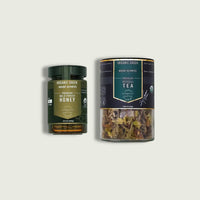
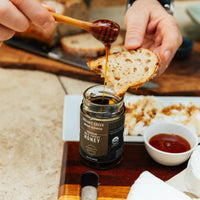
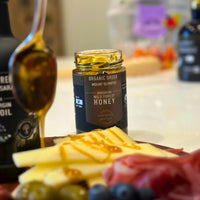
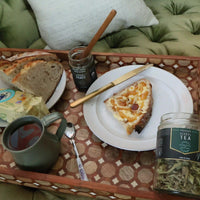
Wild Forest Honey + Herbal Tea
Raw wild forest honey and a four-herb mountain tea, both from Mount Olympus.
One rule: let the tea cool a little before the honey goes in. Below about 105°F (41°C) its enzymes survive.
Details
- Honey
- Raw, never heated
- Tea
- Four Greek mountain herbs
- Packed
- Skotina, Mount Olympus
- Tea preparation
- ½ tsp, boiling water, 5–7 min
Storage
Honey at room temperature, out of direct sun. Tea in a cool, dark place, away from heat and moisture.
Shipping & returns
Free U.S. shipping from $45; a flat $7.99 below that. One bottle of EVOO gets you there. We ship to the U.S. and Canada, from Birmingham, Alabama, within 2–3 business days; shipping to Canada is calculated at checkout.
Food is final sale. If something is wrong with your order, write to info@ambrosia-nektar.com.
 Wild Forest Honey + Herbal Tea
What people say
Shown exactly as customers wrote them.
Very high quality extra virgin olive oil.
Greatly appreciate this purchase
Pomegranate juice is delicious
The best extra-virgin olive oil you can get on the market today!
Iloved it! Great taste
This EvOo is really great, but possibly not for everyone used to standard bland EvOo in the big bottles. It can be used sparingly and is great as a drizzle so the full flavor is noticeable.
very good product
I can really taste the difference! I love this olive oil. Superb flavor
This olive oil tastes amazing. It has a peppery start with a smooth finish. I am very happy with my order.
Excellent Quality
I had a little problem and needed clarification, so I contacted Ambrosia- Nektar. I anticipated the type of standard Customer Service treatment we are getting today from many companies. I believe many of us may have experienced the AI or Cookie Cutter response that is increasingly passed off as Customer Service...or worse yet...our dropped calls forcing us to restart the whole process...as they hope we get frustrated and give up...problem solved! 😆. Well, to my surprise...that was not the case with Ambrosia-Nektar.. I was immediately contacted by a human!!! And he was Theo!
Theo listened, was kind and caring as he took many hours of his day, did in depth research and solved my problem to complete satisfaction. Now that is what I call excellent Customer Service. Thank you Theo, you've restored my faith in professionalism and caring.
When I tasted the olive oil, I was happy I finally found a smooth, olive oil with total disclosure on the processing and certifications that are so hard to find. I did many, many hours of research before choosing Ambrosia-Nektar olive oil. I didn't want hype, slick marketing, nor just words... I wanted...proof. Ambrosia-Nektar olive oil, and Theo...gave me all of this...quality taste, certifications, and excellent caring Customer Service!
I am a very happy customer. Thank you Theo and Ambrosia-Nektar!
I am impressed with the polyphenol score, but it isn’t printed on the label. I like the taste and exclusive quality. The cork top is hard to deal with. It needs a screw on with an insert to control the flow. I have only tried the 6.7 200 ml size so far.
What I noticed right away, is how much the olive oil has retained the taste of the olives, with that I can tell it was processed with care. Highly recommend this company! Everything from the olive oil, to the honey and saffron, was simply extraordinary.
Very rich and bold flavor, not watered down. The Cadillac of honey
Instead of wine we brought our friends this gift set. They loved it!! This is the new gifting.
This is the best gift set!
Two extraordinary olive oils. Beautiful packaging, makes a great gift.
So delicious!!!
It is pricey, but it is worth it! The small oil is quite peppery with a very intense flavor, the big bottle is peppery too but mild and smooth. Makes a great gift!
This olive oil is delicious and it has that gentle burning sensation that indicates the very best quality and most nutritious. The oregano has the rich flavor that comes with being recently harvested and dried.
So delicious! And a great gift!
Fantastic!!!!!
The olive oil is one of the best I’ve ever had. The oregano has a lot of flavor, very intense. All you need is a slice of fresh sourdough bread.
Both oils are fantastic. I’ve never had anything like that. Also great as a gift.
This is a great olive oil combo. The centenarian is extraordinary. Nice gift .
Great gift!! Very good oil, nice packaging.
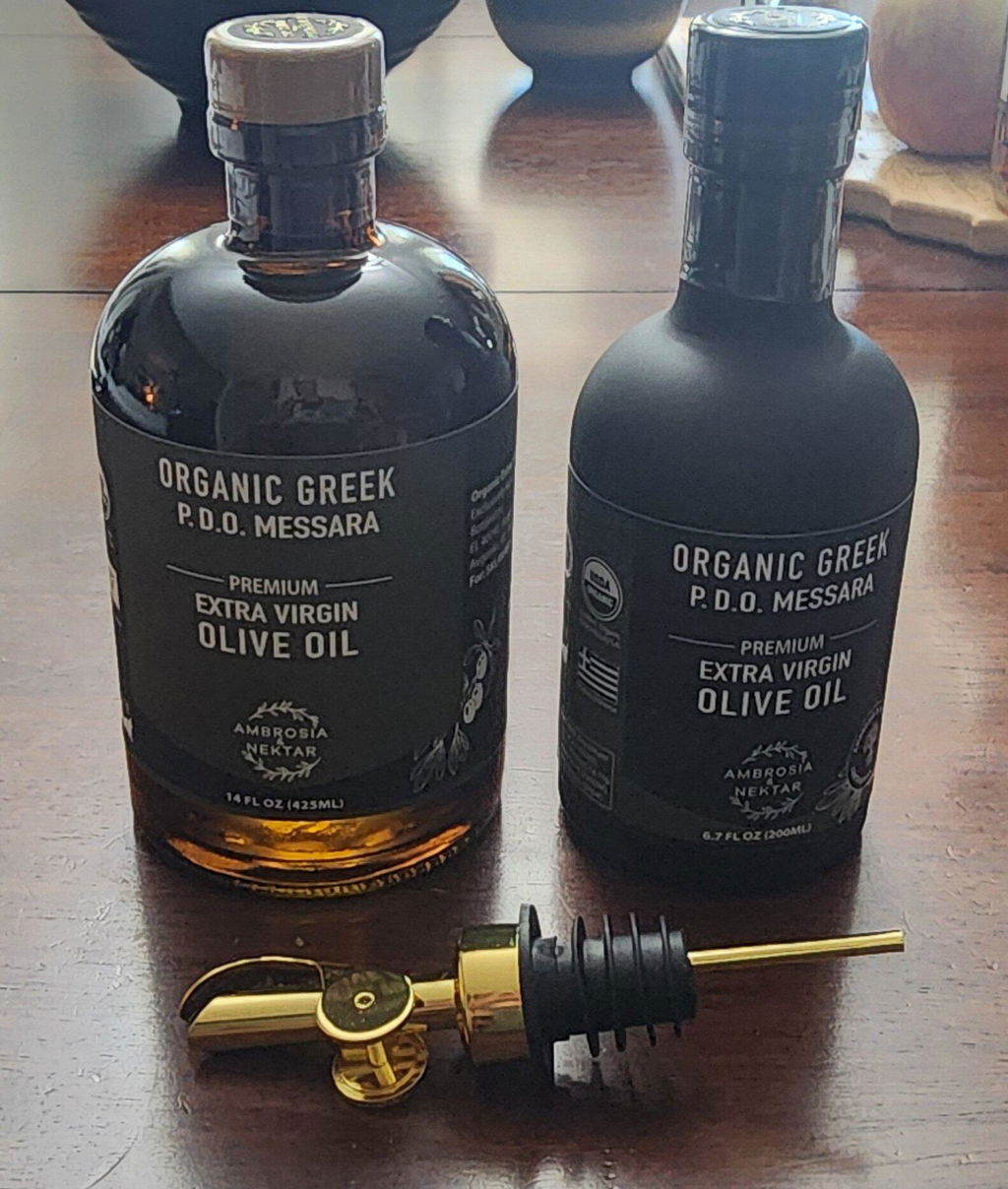
I bought this set as a gift and it felt so much more thoughtful than the usual food basket. The presentation is elegant, the spout makes it feel complete, and the two oils give it a truly special touch. It looks refined, but it is also genuinely useful.
I bought this set as a gift and it felt so much more thoughtful than the usual food basket. The presentation is elegant, the spout makes it feel complete, and the two oils give it a truly special touch. It looks refined, but it is also genuinely useful.
Sent this to friends who love cooking and it was a huge success. The pairing of the regular EVOO with the Centenarian bottle makes it feel elevated and distinctive, and the spout turns it into a proper gift set rather than just three separate items. Very tasteful.
Sent this to friends who love cooking and it was a huge success. The pairing of the regular EVOO with the Centenarian bottle makes it feel elevated and distinctive, and the spout turns it into a proper gift set rather than just three separate items. Very tasteful.
This is such a smart gift idea. It feels luxurious without being flashy, and the combination is beautifully curated. I especially liked that it includes two different olive oils, which makes it feel more generous and interesting than a standard single-bottle gift.
This is such a smart gift idea. It feels luxurious without being flashy, and the combination is beautifully curated. I especially liked that it includes two different olive oils, which makes it feel more generous and interesting than a standard single-bottle gift.