Skip to content

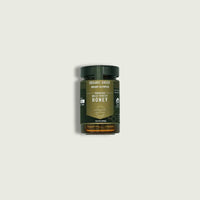
Premium Greek Organic Wild Forest Honey

8.8oz/250g

5.0 (44 Reviews)

Product Details

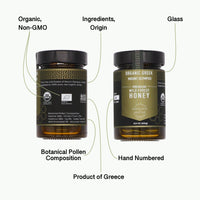
  • Product of Greece
  • Origin: Mount Olympus, Greece. Elevation: 780 ft - 810 ft
  • Small Batch Production: 764 lbs, 1152 jars
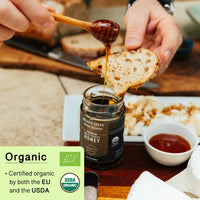
  • Ingredients: 100% Pure Raw Organic Honey
  • 8.8 oz (250g) of honey in a recyclable glass jar

Mount Olympus Wild Forest Honey – a rare and exquisite treasure. This honey is the epitome of exclusivity, with each jar meticulously hand-numbered for authenticity, offering you a true taste of nature’s finest.
Harvested at an altitude of 800 feet, our bees thrive in this pristine wilderness where thyme, oregano, and blackberry grow wild among majestic oaks, firs, chestnuts, and pines. The result is a velvety, thick, deep amber honey with an enchanting woody forest aroma. This latest batch features a slightly spicier kick with intensified caramel overtones, perfectly balanced with medium sweetness for a flavor that’s truly unmatched.
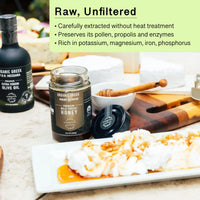
Carefully extracted without any heat treatment, this honey retains its full spectrum of natural goodness, including pollen, propolis, and therapeutic enzymes. It’s also rich in essential minerals like potassium, magnesium, iron, and phosphorus, making it as nourishing as it is delicious.
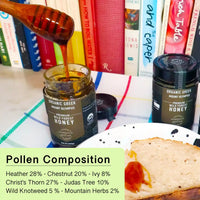
For full transparency, we’ve provided the detailed chemical analysis, (-> Pollen Analysis) where you can explore the nectar sources, composition, and quality of this exceptional honey. This is not just honey; it’s a one-of-a-kind experience and a journey to the heart of Greece’s most storied landscapes. Don’t miss your chance to own a jar of this golden perfection. Quantities are limited, so order now to savor nature’s purest treasure!

Botanical Source Report

The pollen analysis reveals the unique botanical fingerprint of our wild forest honey, confirming its purity, origin, and health-enhancing properties.

View Analysis

Standards. Verified.

The standards we expect for ourselves.

Our honey is shaped by Olympus’ wild forest. We verify the rest.

learn more

Mount Olympus

Perfect alongside

Premium Greek Organic Herbal Tea

$19.00

Honey FAQs

Does honey crystallize?

Pure, raw, unfiltered honey may crystallize over time, but this is a completely natural process that doesn’t affect its quality or nutritional value. In fact, crystallization is often a sign of high-quality honey, rich in pollen and nutrients, and untouched by filtration or heat treatment. The sugar crystals form around the pollen and other beneficial components in the honey, showcasing its natural purity.
 

To return crystallized honey to its liquid state, place the closed jar in a warm (not boiling) water bath. Let it sit for about 30 minutes to an hour. This will liquefy the honey without causing any harm to its properties.

Does honey expire?

Honey boasts an impressive shelf life and doesn't adhere to traditional expiration dates. When appropriately stored, honey can maintain its quality indefinitely. In fact, archaeologists have unearthed ancient pots of honey in Egyptian tombs that remain delectable even after thousands of years! You could say that honey never expires.

How to put honey in tea without losing its health benefits

Wait for the tea to cool slightly. If you add honey to boiling hot tea, the high temperature can potentially degrade some of honey's natural enzymes and delicate nutrients.
 

The safe temperature for adding honey to hot tea is typically below 105°F (41°C).

How to store honey

Honey should be stored at room temperature out of direct sunlight.

Greek honey

«ΕΛΛΗΝΙΚΟ ΜΕΛΙ»
The roots of beekeeping in Greece go back for millennia, to a time where mythology and history imperceptibly coalesced.

Aristaeus, born to Apollo and the nymph Cyrene, was the first man associated with honey. Raised by Gaia and the Horae, they drizzled nectar and ambrosia on the infant’s lips, making him immortal - a process strikingly reminiscent of how a bee becomes a queen.

The Muses taught him divination and medicine, while the Nymphs taught him viticulture, the cultivation of the olive tree, and beekeeping - the art that would come to define him. Aristaeus’ first stop was the Cycladic island of Kea, where he taught the inhabitants beekeeping. Aristaeus and the bee became the symbols of the island, appearing on the coins of Toulida, Karthaia, and Korisia.


Ancient Crete & the Minoans
In Crete, excavations in Phaistos revealed clay hives dating back to the Minoan era (3,400 B.C.). Also from this period are:

A gold jewel depicting two bees and a honeycomb
Another gold jewel shaped like a bee
In the ancient city of Knossos, a plaque was discovered with the inscription:
«Πάσι Θεοίς Μέλι: ΑΜΦΟΡΕΥΣ 1»
meaning:
“Honey is offered to all the Gods: one Amphora.”
 

Honey in Ancient Literature
The Odyssey mentions the Melikraton, a mixture of milk and honey. The orphaned daughters of Pindar were fed by Aphrodite with cheese, honey, and wine. Circe used the same foods to enchant the companions of Odysseus.

Hesiod refers to the “Symblus”, an early form of beehive - human-made and used for breeding bees.

The writings of Aristotle (384–322 B.C.) mark a major milestone in beekeeping knowledge, influencing Greece and the wider ancient world.
 

Law, Medicine & Tradition
The Athenian lawmaker Solon (640–558 B.C.) enacted regulations for beekeeping, including the required distance between apiaries:

“Swarms of bees placed at a distance of three hundred feet from previously established ones.”
- Plutarch, Bios Solonos

Hippocrates (462–352 B.C.) recommended honey widely, especially for the unwell.

When Democritus (460–370 B.C.) was asked how to remain healthy and live long, he famously replied:
“The outside is oil of the body and the inside is honey.”

Pythagoras (570–490 B.C.) and his followers considered honey a central food.
 

Beekeeping Innovation
The mobile beehive was already used in ancient Greece. On Kythera, beekeepers used the Adonaki, the forerunner of today’s modern European hive - a concept later echoed in the design attributed to Lorenzo Lorraine Langstroth.
 

Greek Honey Today
With more than 180 nutrients, honey is naturally rich and remarkably complex. It contains carbohydrates, antioxidants, B-complex vitamins, trace elements and minerals such as calcium, magnesium, zinc, iron, and copper.

The extraordinary biodiversity of Greece, with over 1,300 endemic plants, combined with rugged terrain and many untouched regions far from industry, shapes the character of Greek honey. It is renowned for its distinctive flavor, aroma, density and overall quality, standing apart from honey produced elsewhere.

What Our Customers Are Saying

Your Personal Collection

Premium Greek Organic Wild Forest Honey

8.8oz/250g

5.0 (44 Reviews)

Product Details

  • Product of Greece
  • Origin: Mount Olympus, Greece. Elevation: 780 ft - 810 ft
  • Small Batch Production: 764 lbs, 1152 jars
  • Ingredients: 100% Pure Raw Organic Honey
    8.8 oz (250g) of honey in a recyclable glass jar

Mount Olympus Wild Forest Honey – a rare and exquisite treasure. This honey is the epitome of exclusivity, with each jar meticulously hand-numbered for authenticity, offering you a true taste of nature’s finest.
Harvested at an altitude of 800 feet, our bees thrive in this pristine wilderness where thyme, oregano, and blackberry grow wild among majestic oaks, firs, chestnuts, and pines. The result is a velvety, thick, deep amber honey with an enchanting woody forest aroma. This latest batch features a slightly spicier kick with intensified caramel overtones, perfectly balanced with medium sweetness for a flavor that’s truly unmatched.
Carefully extracted without any heat treatment, this honey retains its full spectrum of natural goodness, including pollen, propolis, and therapeutic enzymes. It’s also rich in essential minerals like potassium, magnesium, iron, and phosphorus, making it as nourishing as it is delicious.
For full transparency, we’ve provided the detailed chemical analysis, (-> Pollen Analysis) where you can explore the nectar sources, composition, and quality of this exceptional honey. This is not just honey; it’s a one-of-a-kind experience and a journey to the heart of Greece’s most storied landscapes. Don’t miss your chance to own a jar of this golden perfection. Quantities are limited, so order now to savor nature’s purest treasure!

Standards. Verified.

Learn more

Botanical Source Report

The pollen analysis reveals the unique botanical fingerprint of our wild forest honey, confirming its purity, origin, and health-enhancing properties.

View Analysis

Perfect alongside

Premium Greek Organic Herbal Tea

$19.00

Honey FAQs

Does honey crystallize?

Pure, raw, unfiltered honey may crystallize over time, but this is a completely natural process that doesn’t affect its quality or nutritional value. In fact, crystallization is often a sign of high-quality honey, rich in pollen and nutrients, and untouched by filtration or heat treatment. The sugar crystals form around the pollen and other beneficial components in the honey, showcasing its natural purity.
 

To return crystallized honey to its liquid state, place the closed jar in a warm (not boiling) water bath. Let it sit for about 30 minutes to an hour. This will liquefy the honey without causing any harm to its properties.

Does honey expire?

Honey boasts an impressive shelf life and doesn't adhere to traditional expiration dates. When appropriately stored, honey can maintain its quality indefinitely. In fact, archaeologists have unearthed ancient pots of honey in Egyptian tombs that remain delectable even after thousands of years! You could say that honey never expires.

How to put honey in tea without losing its health benefits

Wait for the tea to cool slightly. If you add honey to boiling hot tea, the high temperature can potentially degrade some of honey's natural enzymes and delicate nutrients.
 

The safe temperature for adding honey to hot tea is typically below 105°F (41°C).

How to store honey

Honey should be stored at room temperature out of direct sunlight.

Greek honey

«ΕΛΛΗΝΙΚΟ ΜΕΛΙ»
The roots of beekeeping in Greece go back for millennia, to a time where mythology and history imperceptibly coalesced.

Aristaeus, born to Apollo and the nymph Cyrene, was the first man associated with honey. Raised by Gaia and the Horae, they drizzled nectar and ambrosia on the infant’s lips, making him immortal - a process strikingly reminiscent of how a bee becomes a queen.

The Muses taught him divination and medicine, while the Nymphs taught him viticulture, the cultivation of the olive tree, and beekeeping - the art that would come to define him. Aristaeus’ first stop was the Cycladic island of Kea, where he taught the inhabitants beekeeping. Aristaeus and the bee became the symbols of the island, appearing on the coins of Toulida, Karthaia, and Korisia.


Ancient Crete & the Minoans
In Crete, excavations in Phaistos revealed clay hives dating back to the Minoan era (3,400 B.C.). Also from this period are:

A gold jewel depicting two bees and a honeycomb
Another gold jewel shaped like a bee
In the ancient city of Knossos, a plaque was discovered with the inscription:
«Πάσι Θεοίς Μέλι: ΑΜΦΟΡΕΥΣ 1»
meaning:
“Honey is offered to all the Gods: one Amphora.”
 

Honey in Ancient Literature
The Odyssey mentions the Melikraton, a mixture of milk and honey. The orphaned daughters of Pindar were fed by Aphrodite with cheese, honey, and wine. Circe used the same foods to enchant the companions of Odysseus.

Hesiod refers to the “Symblus”, an early form of beehive - human-made and used for breeding bees.

The writings of Aristotle (384–322 B.C.) mark a major milestone in beekeeping knowledge, influencing Greece and the wider ancient world.
 

Law, Medicine & Tradition
The Athenian lawmaker Solon (640–558 B.C.) enacted regulations for beekeeping, including the required distance between apiaries:

“Swarms of bees placed at a distance of three hundred feet from previously established ones.”
- Plutarch, Bios Solonos

Hippocrates (462–352 B.C.) recommended honey widely, especially for the unwell.

When Democritus (460–370 B.C.) was asked how to remain healthy and live long, he famously replied:
“The outside is oil of the body and the inside is honey.”

Pythagoras (570–490 B.C.) and his followers considered honey a central food.
 

Beekeeping Innovation
The mobile beehive was already used in ancient Greece. On Kythera, beekeepers used the Adonaki, the forerunner of today’s modern European hive - a concept later echoed in the design attributed to Lorenzo Lorraine Langstroth.
 

Greek Honey Today
With more than 180 nutrients, honey is naturally rich and remarkably complex. It contains carbohydrates, antioxidants, B-complex vitamins, trace elements and minerals such as calcium, magnesium, zinc, iron, and copper.

The extraordinary biodiversity of Greece, with over 1,300 endemic plants, combined with rugged terrain and many untouched regions far from industry, shapes the character of Greek honey. It is renowned for its distinctive flavor, aroma, density and overall quality, standing apart from honey produced elsewhere.

What Our Customers 
Are Saying